
Clinical history
In April 2026 we were contacted to take on the case of Lola, an elderly pony who had been suffering from chronic laminitis for several years, together with significant hoof deformation.
The prolonged course of the disease had caused important alterations in hoof morphology and in the biomechanical relationship between the horn capsule and the internal structures of the foot. In a case of these characteristics, the initial objective was to assess the current state of the hoof and establish a treatment able to improve Lola's comfort and, progressively, restore the structures affected by laminitis.
Initial assessment
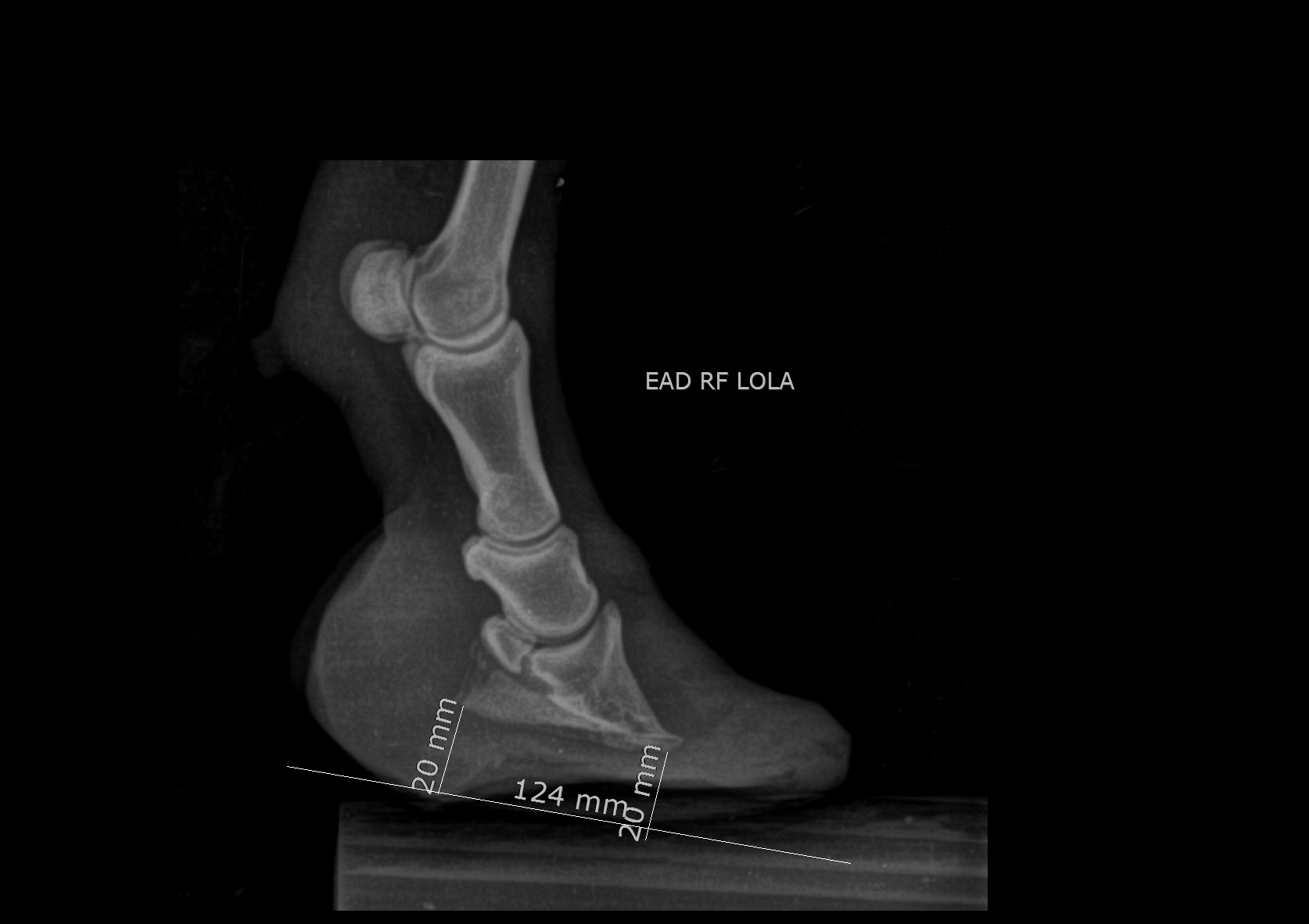
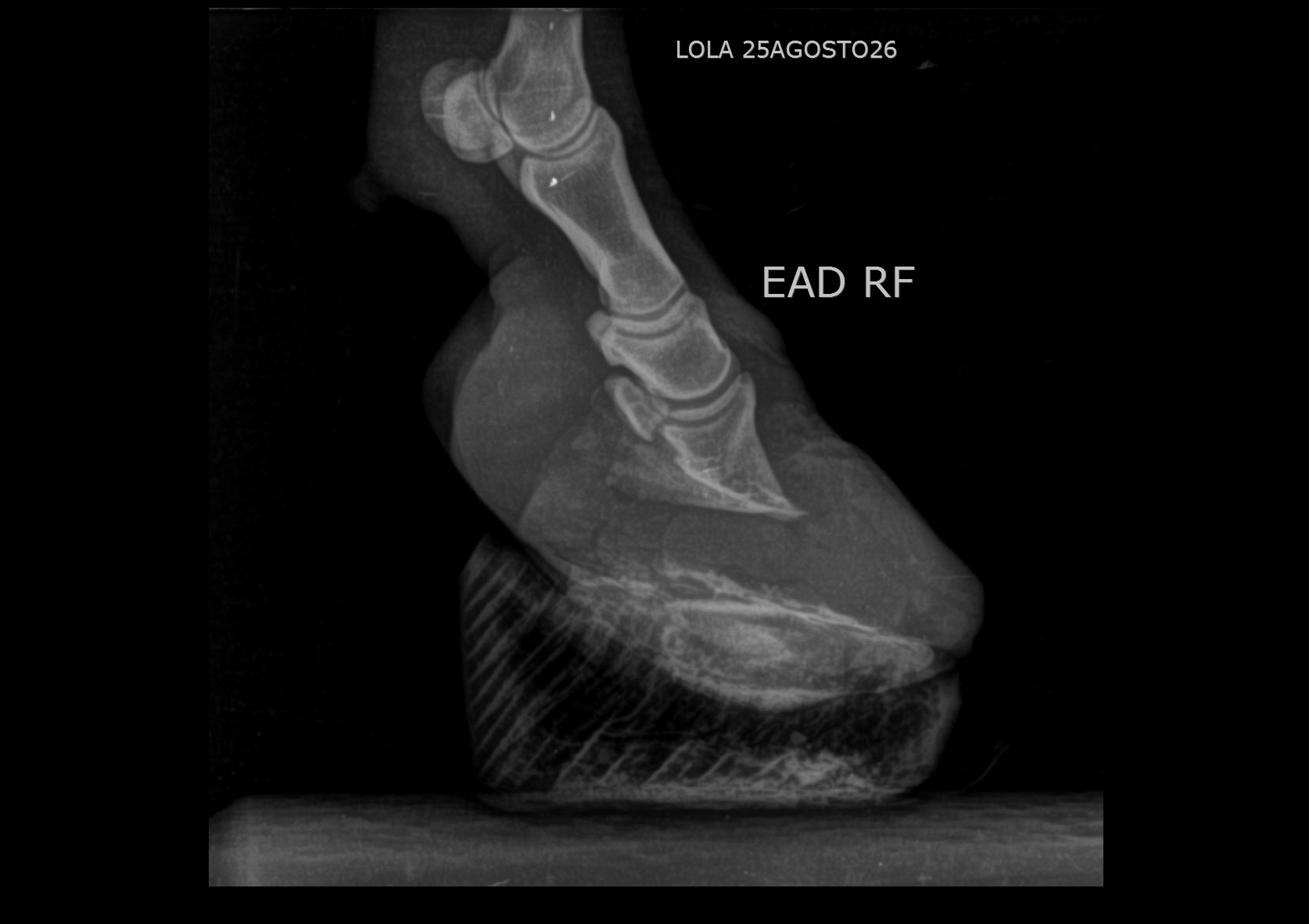
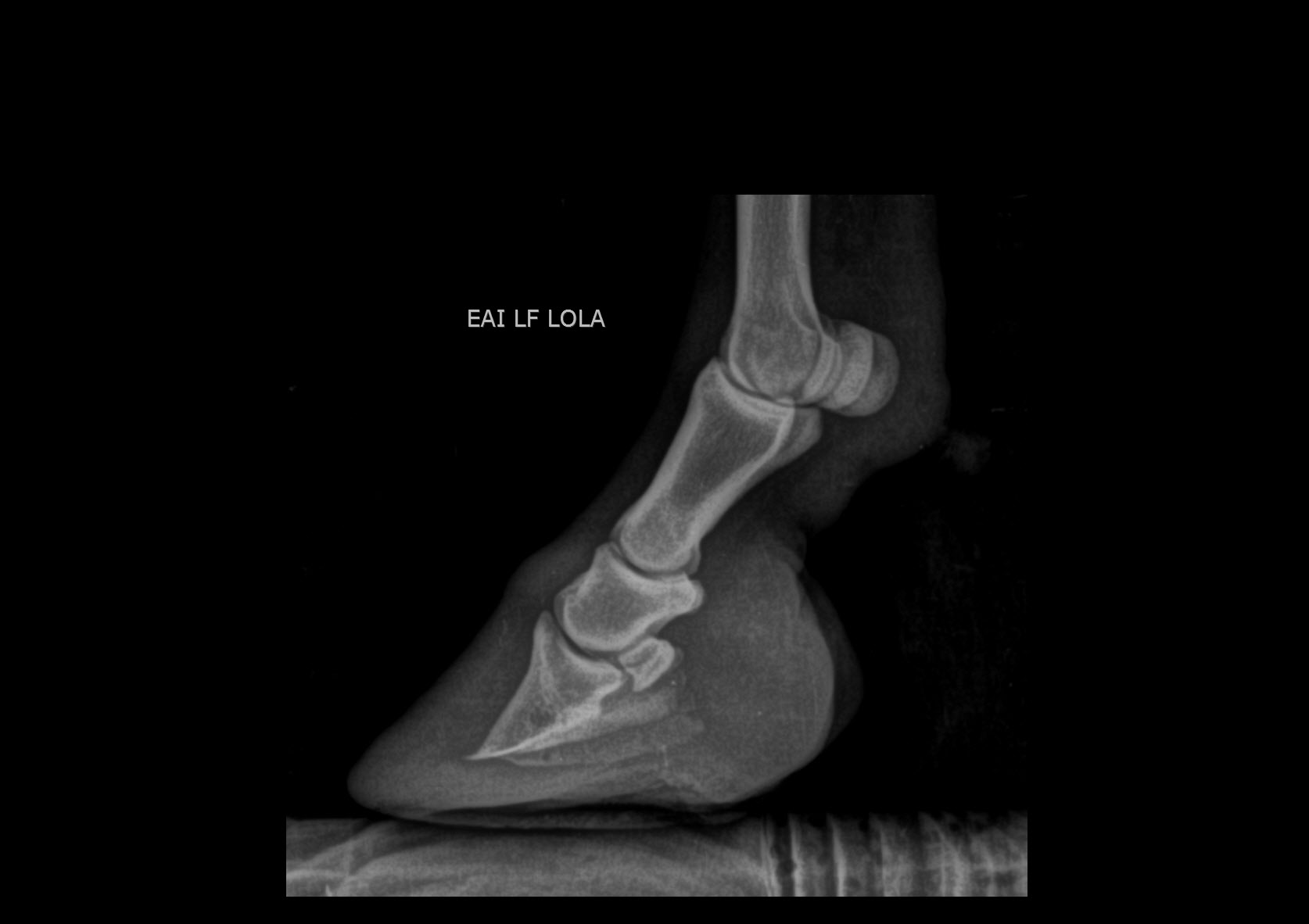
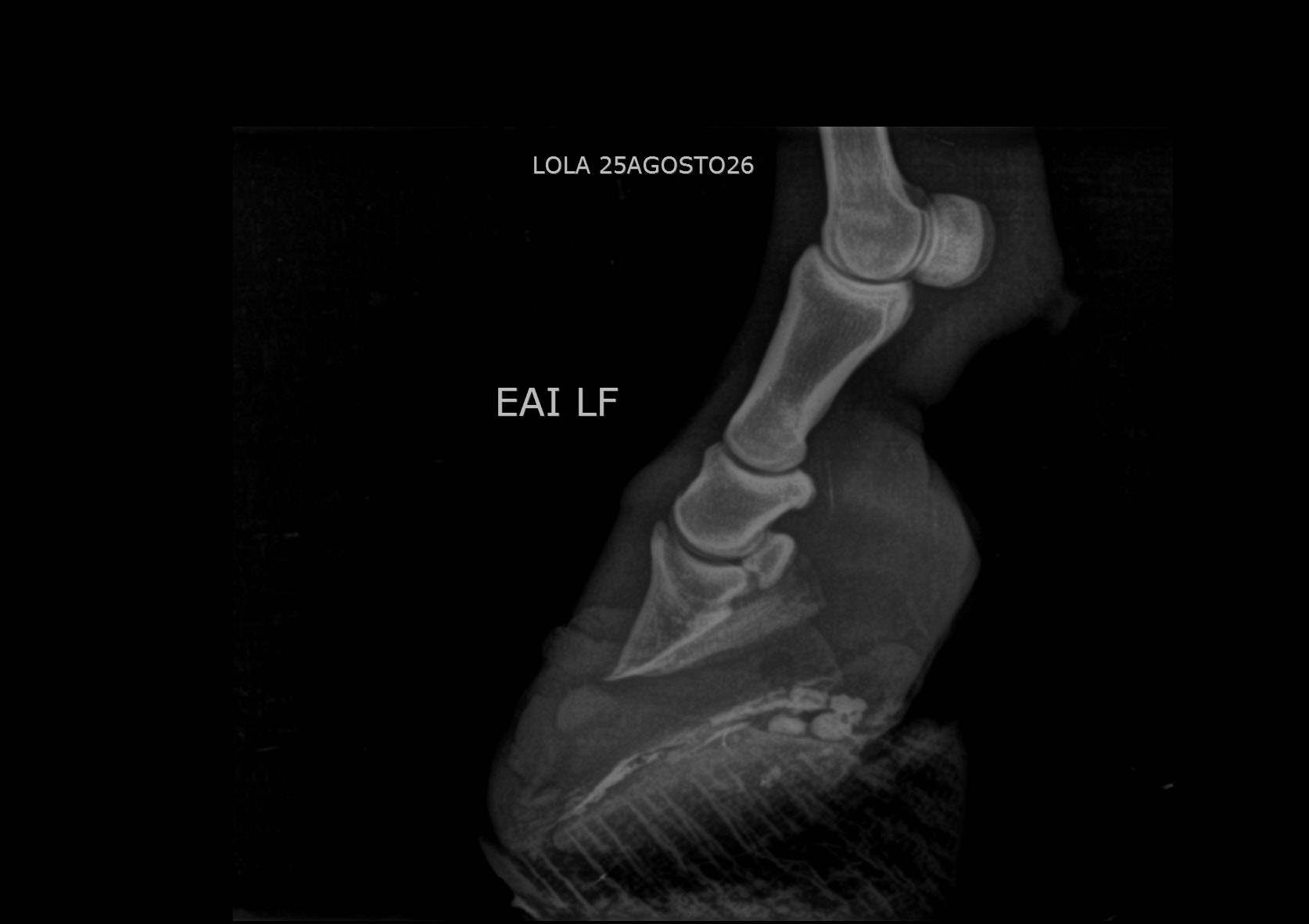
We performed a complete clinical examination together with a radiographic study and hoof measurements. The radiographs allowed us to assess the position of the third phalanx (P3), sole depth and the alterations produced by the chronic course of laminitis.
The hoof deformation was the consequence of years of biomechanical alterations associated with the disease. For this reason, it was not simply a matter of correcting the external shape of the hoof, but of progressively modifying the mechanical conditions affecting the internal structures.
Based on the radiographs and the records obtained, we designed and manufactured custom 3D-printed horseshoes specifically for Lola, adapted to her anatomy and to the therapeutic needs of her case.
Laminitis treatment
Treatment was based on 3D-printed horseshoes designed specifically for a hoof affected by chronic laminitis.
The main objective was to modify load distribution and reduce harmful mechanical forces on the internal structures of the hoof. At the same time, we aimed to create conditions allowing sole production to recover progressively, improving support for P3 and favouring the hoof recovery process.
In chronic laminitis cases, recovery is not immediate. Hoof growth takes time, and each new growth phase allows the biomechanics of the foot to be progressively modified.
For this reason, Lola has followed a programme of periodic corrective trimming and horseshoe replacement, adapting treatment to the changes occurring in the hoof during recovery.
Progression and results
Lola's response to treatment was very rapid. From the fitting of the first custom horseshoes we observed an immediate and significant improvement in her comfort.
Lola began to move more easily and showed a much more active attitude, with an evident improvement in her quality of life.
The case is currently still in the recovery phase, but we can already observe significant progress in different aspects of her chronic laminitis.
Follow-up radiographs show a progressive increase in sole depth and a favourable evolution in the repositioning of the third phalanx (P3).
We also continue to observe positive changes in hoof conformation as new horn tissue grows and the relationship between the hoof capsule and P3 progressively changes.
A progressive recovery
Lola still has a recovery path ahead of her. After several years of chronic laminitis and hoof deformation, recovery of the affected structures requires time and a treatment carefully adapted to each stage.
Nevertheless, the progression observed so far is very positive.
The increase in sole depth, the progressive repositioning of P3 and, especially, the sustained improvement in Lola's comfort and quality of life are important indicators that the treatment is allowing the hoof to move towards a more stable situation.
This case demonstrates the importance of an individualised assessment of every horse with laminitis. Radiographs, hoof records and periodic follow-up make it possible to design a specific treatment and adapt hoof biomechanics as recovery progresses.
Recovering from chronic laminitis is not only about correcting the shape of the hoof. The objective is to create the conditions the hoof needs to progressively recover its structure, function and support capacity.