
About us
About Apex Horseshoes — laminitis horseshoe specialists
Custom therapeutic horseshoes designed around the individual patient — combining science, biomechanics, innovation and clinical experience.
The founder
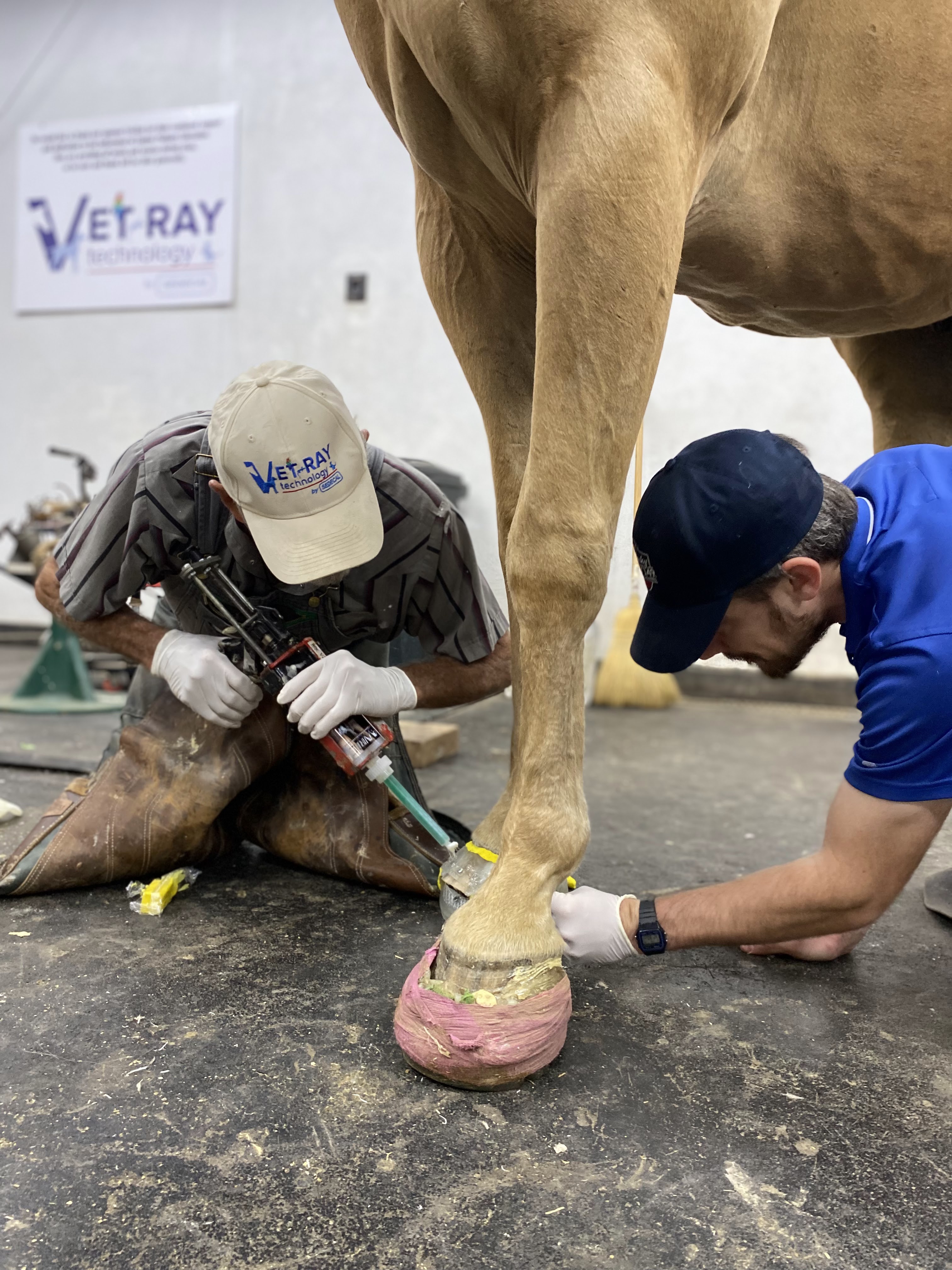
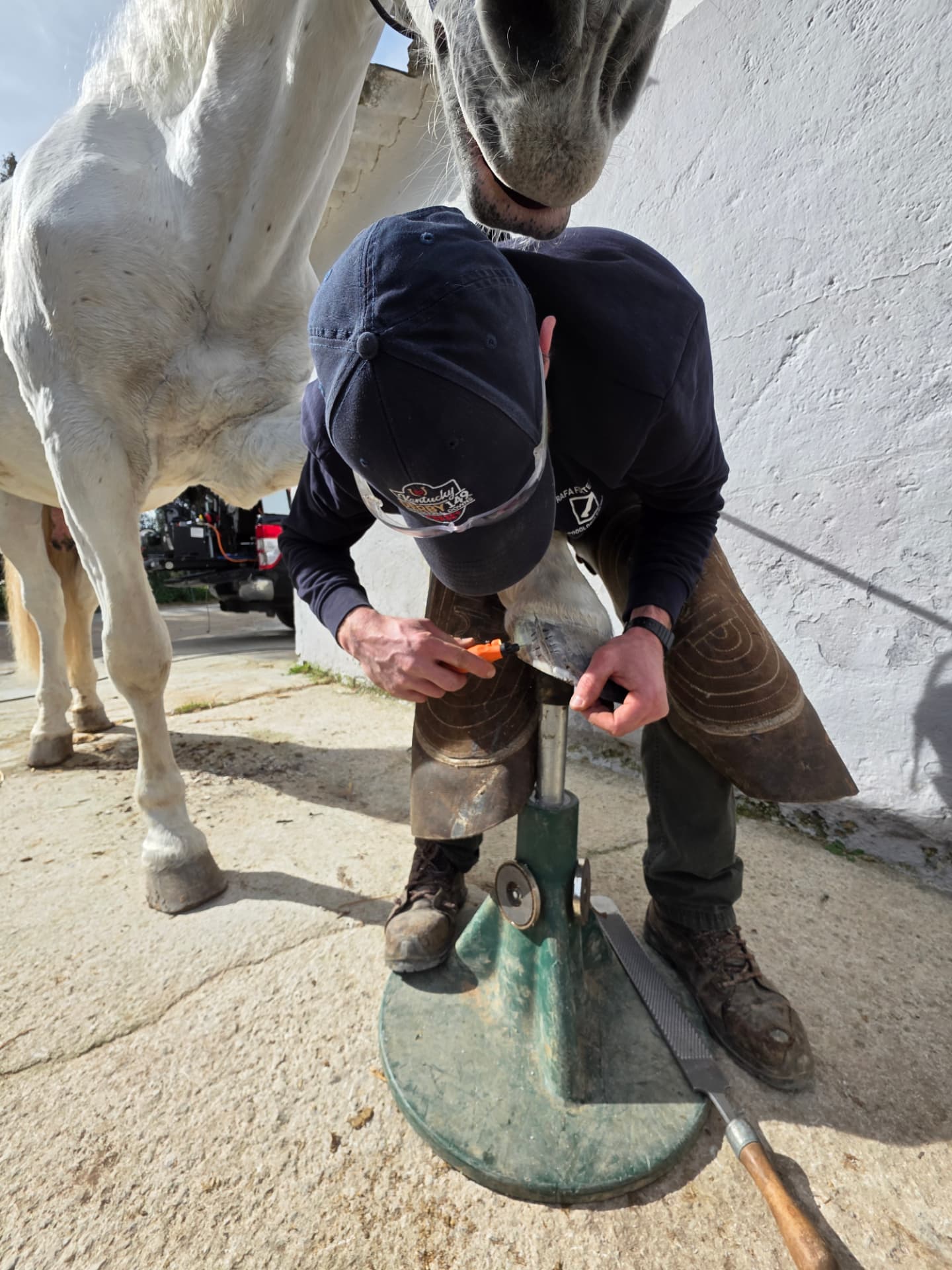
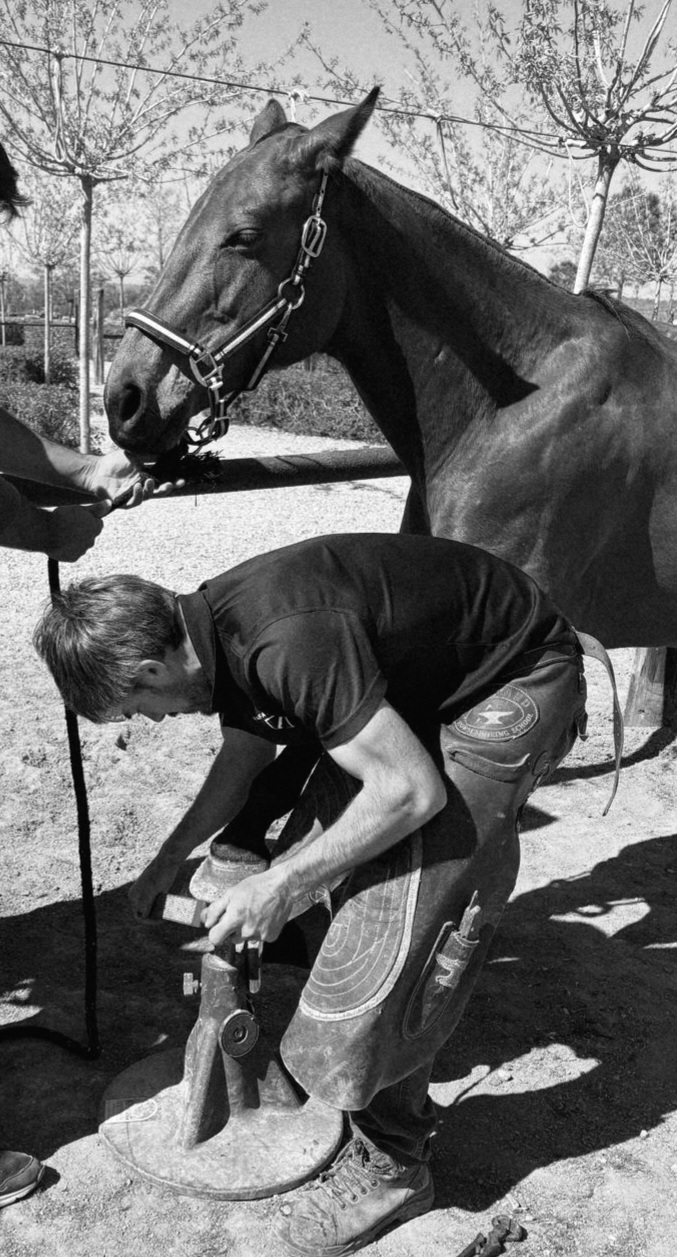
Apex Horseshoes is a project created by Rafa Forteza, an equine podiatrist specialized in the study of the hoof, its biomechanics, and the development of solutions adapted to the individual needs of each horse.
Rafa has trained under the principles of his mentor, Dr. Ric Redden, whom he considers a father figure. Dr. Redden is one of the most influential figures in modern equine podiatry: a farrier, veterinarian, researcher, and educator whose work has shaped how the industry understands the biomechanics of the equine foot and the treatment of complex hoof pathologies. His contributions to laminitis management, hoof surgery, and therapeutic shoeing have influenced veterinarians, farriers, and podiatrists around the world.
Following Dr. Redden's approach, Apex Horseshoes places science, respect for hoof anatomy, and the wellbeing of each patient at the center of every design.
Who is Rafael Forteza
International training in equine podiatry and therapeutic shoeing.
Rafael Forteza's training includes programmes and clinical placements in the United States, Switzerland, and other specialist centers, with a special focus on equine podiatry, therapeutic shoeing, biomechanics, and hoof rehabilitation.
This international training has allowed him to work and learn alongside professionals of recognised prestige in the world of farriery and equine podiatry.
Heartland Horseshoeing School – United States
Rafael Forteza began his specialist training at Heartland Horseshoeing School, where he trained alongside Chris Gregory and Cody Gregory. This stage provided a solid foundation in hoof anatomy and physiology, horseshoeing and shoe fitting, forging and manufacturing. This training was fundamental for later developing a more specialised approach to equine podiatry and therapeutic shoeing.
Training with Steve Stanley – International Horseshoeing Hall of Fame
Rafael Forteza also trained alongside Steve Stanley, a farrier recognised for his professional career and especially specialised in competition Standardbred horses. This training allowed him to deepen his knowledge of hoof balance, biomechanics, locomotor efficiency, sports-horse shoeing, and adapting shoes to the needs of the competition horse. Working with high-performance horses makes it possible to understand the importance that small modifications in hoof balance and support have on locomotion and sporting performance.
Rood & Riddle Equine Hospital – Lexington, Kentucky
A particularly important part of Rafael Forteza's training took place at Rood & Riddle Equine Hospital in Lexington, Kentucky, one of the leading equine veterinary centres in the United States. During his stay he attended observation cases alongside Scott Morrison, a specialist in therapeutic shoeing, biomechanics, and locomotor rehabilitation. This experience allowed him to deepen the interaction between veterinary medicine, equine podiatry, and therapeutic shoeing, working on real clinical cases and learning to interpret the hoof within the general context of the horse. Areas studied included biomechanical movement analysis, functional hoof assessment, therapeutic shoeing, locomotor rehabilitation, radiographic interpretation, podological treatment of complex pathologies, and coordinated work between veterinarians and farriers.
Advanced training with Dr. Ric Redden
Rafael Forteza has undertaken specialised training with Dr. Ric Redden, one of the international references in the study and treatment of equine hoof pathologies. He has participated in three intensive equine podiatry courses taught by Dr. Ric Redden, focused especially on the diagnosis, treatment, and rehabilitation of complex cases. The training deepened hoof biomechanics, functional anatomy, radiographic interpretation, hoof pathologies, laminitis, hoof deformities, chronic lameness, therapeutic shoeing, and rehabilitation strategies. This training has helped develop an approach based on the individual assessment of each horse and adapting treatment to the evolution of each case.
International Equine Podiatry Center – IEPC
Rafael Forteza also completed a three-month individual internship at the International Equine Podiatry Center (IEPC) alongside Dr. Ric Redden in Lexington, Kentucky. During this period he gained advanced experience in treating complex hoof pathologies and in the practical application of different therapeutic shoeing and equine podiatry techniques. The training included mechanical shoeing, radiographic interpretation, venogram interpretation, assessment of the position of the distal phalanx, laminitis, navicular syndrome, collapsed heels, club-footed horses, chronic hoof alterations, and the design and adaptation of therapeutic solutions. This clinical experience allowed him to deepen especially the relationship between the internal structures of the hoof, its external conformation, and the biomechanical forces involved in movement.
American Farriers Team – Clinic AFT
Rafael Forteza has also participated in Clinic AFT, a training programme associated with the American Farriers Team, focused on developing advanced forging and shoeing skills. The training covered advanced forging techniques, precision in horseshoe manufacturing, fitting and modifying horseshoes, technically demanding work, and improving precision and efficiency in shoeing. This forging experience complements his training in equine podiatry, making it possible to understand not only how a shoe should function but also how to modify and adapt it to the specific needs of each case.
WEPA Certification – Farrier Module 1-2
Rafael Forteza is also a WEPA-trained farrier, having completed WEPA Farrier Module 1-2 in Heldswil, Switzerland. This training deepens the functional anatomy of the horse, gait analysis, and hoof assessment from a biomechanical perspective. Content covered includes functional anatomy of the horse, gait analysis, radiographic interpretation, conformation assessment, detailed hoof examination, measurement of angles and lengths, assessment of the position of the distal phalanx, the WTS concept, unshod and barefoot deshoeing techniques, use and adaptation of WTS shoes, fitting of standard and specific shoes, mechanical grinding, nailing techniques, and follow-up and monitoring protocols. This training broadens the technical knowledge required to assess the hoof globally and establish work strategies aimed at maintaining or recovering its balance and function.
Our Story
Apex Horseshoes was born from a single challenging case.
Everything began with a small donkey suffering from a complex hoof pathology for which no suitable therapeutic shoe existed. After exploring every available option, it became clear that the market simply did not offer a solution capable of meeting that animal's specific biomechanical needs.
Rather than adapting an existing horseshoe, we decided to create one from scratch.
That decision marked the beginning of an extensive journey of research, design, material selection, 3D manufacturing, and continuous testing. Every prototype brought new knowledge, and through a process of analysis, refinement, and trial and error, we developed a therapeutic shoe that successfully addressed the individual needs of that donkey.
The results exceeded our expectations.
That experience fundamentally changed the way we approach therapeutic shoeing. It demonstrated that every horse, pony, and donkey presents unique anatomical and biomechanical characteristics, and that complex hoof pathologies cannot always be solved with standard, mass-produced horseshoes.
Today, every Apex Horseshoes design is created specifically for the individual patient. Using radiographs, biomechanical analysis, and advanced 3D design, we manufacture custom therapeutic horseshoes tailored to each hoof, each pathology, and each stage of rehabilitation.
What began as a solution for one small donkey has evolved into a philosophy of personalized hoof care—one that combines science, biomechanics, innovation, and clinical experience to improve the comfort, function, and long-term recovery of horses around the world.
Our Mission
Our mission is to improve the quality of life of horses, ponies, and donkeys affected by hoof pathologies through science, biomechanics, and innovation.
We believe that every patient deserves an individualized solution. Instead of adapting the horse to a standard horseshoe, we design each therapeutic shoe around the unique anatomy, biomechanics, and pathology of the individual hoof.
By combining veterinary collaboration, radiographic analysis, digital design, and advanced 3D manufacturing, our goal is to provide therapeutic solutions that improve comfort, restore healthy hoof function, promote blood circulation, and support long-term rehabilitation.
Above all, our mission is to give every horse the best possible opportunity to recover while helping veterinarians, farriers, and owners make informed decisions based on sound biomechanics and clinical evidence.
Our Values
Everything we do is guided by a simple set of principles that shape every decision, every design, and every therapeutic shoe we produce.
Horse welfare comes first.
Every decision is made with one objective: improving the comfort, soundness, and quality of life of the horse.
Science before opinion.
Our work is based on biomechanics, radiographic evaluation, clinical evidence, and continuous observation rather than assumptions or tradition alone.
Innovation with purpose.
We do not innovate for the sake of technology. Every new material, design, and manufacturing process must provide a genuine clinical benefit.
Precision in every design.
No two hooves are identical. Every therapeutic horseshoe is individually designed to match the specific anatomy, biomechanics, and pathology of each patient.
Collaboration creates better outcomes.
The best results are achieved when veterinarians, farriers, and horse owners work together towards the same goal.
Patience is part of the treatment.
Hoof rehabilitation takes time. Lasting results are achieved through careful planning, consistency, and allowing biology the time it needs to heal.
Never stop learning.
Every clinical case teaches us something new. Continuous research, education, and refinement are essential to improving the care we provide.
Our Philosophy
At Apex Horseshoes, we believe that successful therapeutic shoeing is built on three principles: understanding, planning, and patience.
Every hoof tells a different story. Every pathology has its own mechanical challenges. For this reason, we do not believe in universal solutions or quick fixes. Every treatment begins with understanding the pathology, analysing the radiographs, evaluating the biomechanics, and developing a clear plan before a horseshoe is ever designed.
Patience is one of the most important parts of that process.
A complete hoof capsule takes approximately one year to regenerate. Healthy hoof structures cannot be rebuilt in a few weeks, regardless of the type of shoe being used. While many owners naturally hope for immediate results, true rehabilitation follows biology—not expectations.
Therapeutic shoeing is not about producing a dramatic improvement overnight. It is about creating the conditions that allow the hoof to heal over time.
We believe that consistent progress, supported by regular reassessment and thoughtful decision-making, always produces better long-term outcomes than rushing from one solution to another.
The best results are achieved when veterinarians, farriers, and owners work together with a shared plan and the patience to allow that plan to succeed.
The Technology Behind Apex Horseshoes
Every Apex Horseshoes therapeutic shoe begins with data rather than assumptions.
Our workflow combines veterinary imaging, digital engineering, and advanced manufacturing to create a horseshoe specifically designed for each individual patient.
The process includes:
- Radiographic evaluation
- Biomechanical hoof assessment
- Digital measurements
- Computer-aided (CAD) design
- Custom 3D manufacturing
- Individual finishing and quality control
Rather than modifying an existing shoe, we engineer every design from the ground up according to the pathology, hoof conformation, and therapeutic objectives.
This approach allows us to optimise breakover, improve weight distribution, increase sole support, reduce excessive mechanical stress, and help restore healthy blood circulation within the hoof.
Technology does not replace clinical judgement—it enhances it. Our digital workflow enables more precise communication between veterinarians, farriers, and designers, leading to better-informed therapeutic decisions.
Veterinary Collaboration
Successful rehabilitation is rarely the result of one professional working alone.
At Apex Horseshoes, we believe that the best outcomes are achieved when veterinarians, farriers, and horse owners collaborate as a team.
The veterinarian provides the diagnosis and clinical assessment. The farrier contributes practical expertise in hoof care and shoe application. We integrate this information with biomechanical analysis and digital design to create a therapeutic horseshoe tailored to the individual horse.
Radiographs play a central role in our workflow. They allow us to evaluate the position of the distal phalanx, sole depth, hoof balance, and other critical structures that cannot be accurately assessed from the outside alone.
By combining clinical information with precise engineering, we aim to produce therapeutic solutions that are based on objective evidence rather than guesswork.
Research & Innovation
Innovation at Apex Horseshoes is driven by one question: how can we improve the outcome for the next patient?
Every clinical case provides an opportunity to learn.
We continuously evaluate the performance of our therapeutic shoes, analyse follow-up radiographs, study hoof growth, assess biomechanical changes, and refine our designs based on real clinical experience.
Our work includes ongoing research into:
- Hoof biomechanics
- Blood circulation within the hoof
- Sole growth and protection
- Advanced polymers and manufacturing materials
- Digital design techniques
- 3D printing technologies
- Rehabilitation strategies for complex hoof pathologies
Innovation is not simply about using new technology. It is about applying science, engineering, and clinical observation to create better therapeutic solutions for horses around the world.
Every new design builds upon the lessons learned from previous cases, allowing Apex Horseshoes to continue evolving with every patient we treat.